Introducing go:bangs: A search engine approach for golinks

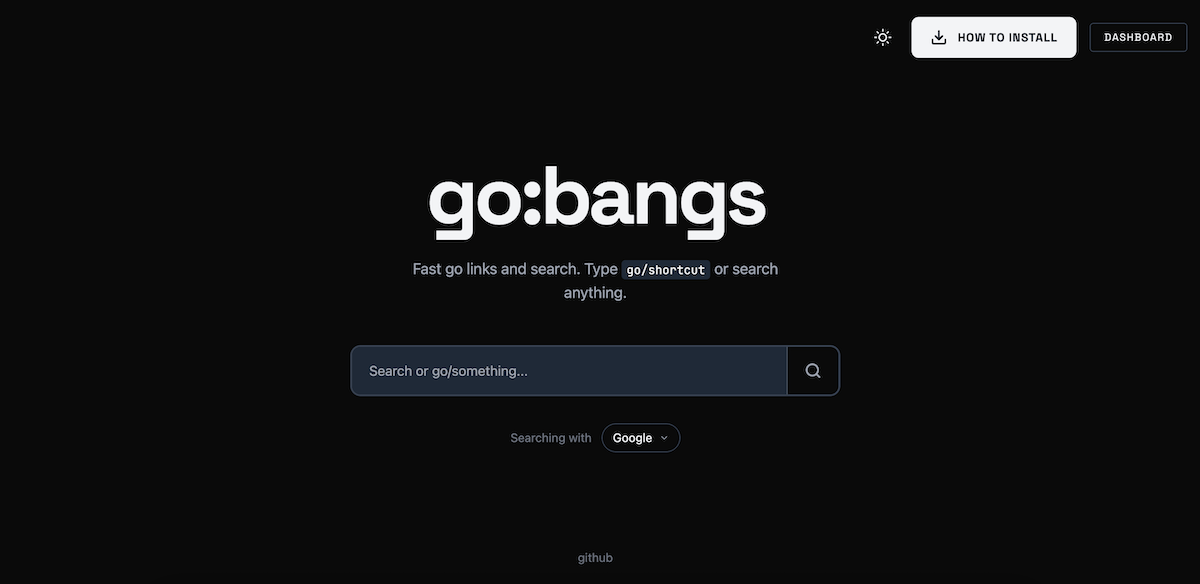
Most go-links solutions push teams toward browser extensions or fragile custom setups.
Big tech companies usually have the resources to build and maintain in-house go-links systems. Most companies do not.
I am building go:bangs as a search-engine-first alternative for small and medium businesses: faster redirects, built-in suggestions, and team-based go-link resolution without extension dependency.
It is heavily inspired by unduck.link.
This is not a launch post yet. It is still in active development, and the plan is to release it as open source.
Core Flow
go:bangs is meant to proxy your search engine of choice.
If you choose Google, go:bangs will query Google for search and suggestions. If you choose another engine, it will use that engine instead.
It also supports DuckDuckGo bangs. For example, theprimetime !yt should resolve directly to YouTube search. Full bang reference: duckduckgo.com/bangs.
When your search term starts with go/, go:bangs resolves go links that you are authorized to access, with team-based access control.
Because this flow uses search engine suggestion endpoints, it can provide go-link autocomplete directly in the browser address bar.
Why This Approach
An alternative would be a browser extension, but that creates extra maintenance work per browser, ongoing updates, and extension permission friction.
Another practical downside: if an extension gets disabled, some approaches leave users with https://go/foobar entries in history and broken behavior.
The search-engine approach is based on browser standards that have existed for a long time, which keeps the integration simpler and more robust.
Caveat: Incognito
Incognito/private windows are a trade-off.
This flow depends on session authentication and a cookie-stored search-engine preference. In incognito, you need to reauthenticate to access go/links. However, you can still use the bangs and the search engine (fallsback to DuckDuckGo for now).
What Is Planned
- Multi-database support: SQLite, PostgreSQL, and Turso.
- Flexible deployment targets: Cloudflare, Vercel, and your own Docker image.
- Open-source release so teams can self-host and extend it.
I will share a full launch post when it is ready. For now, this is the direction and the scope I am building toward.